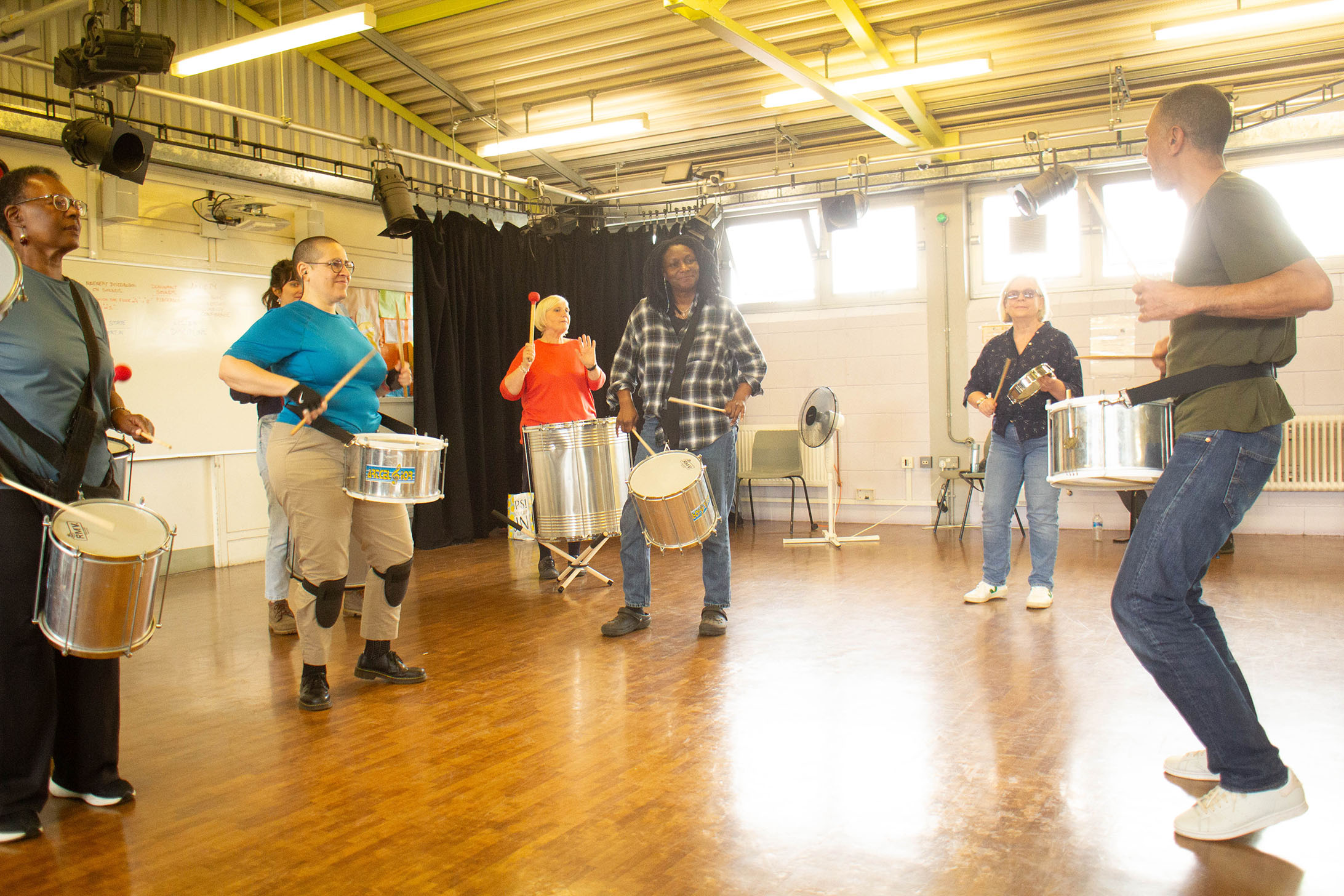
Samba (music) is a word like rock (music) in that there are lots of types of samba. Afro bloc samba evolved out of the ‘escola de samba’ and ‘afoxe’ music and carnival traditions of Salvador, one-time colonial capital of Brazil in the north-eastern state of Bahia. Bahia de Todos os Santos. All Saints Bay.
During the period of the Atlantic slave trade, more African captives were shipped by the Portuguese to the port of Salvador then the total numbers that the English, French and Spanish combined shipped to the States and the Caribbean.
Brazil boasts the biggest black African population outside the African continent.
Some, myself included, regard the word samba as coming from the Bantu family of Niger-Congo languages meaning navel (umbilicus). Samba is a life force. An irrepressible and unrelenting tsunami of rhythm that immerses the mind, body and soul in a warm, full body embrace soothing the aches and pains of everyday life with song and dance. A community-focused artistic respite in which individual creative expression is fostered by the will of communities to facilitate inclusive safe spaces in which we can all feel accepted for who we are and thereby feel comfortable in sharing what we have to offer.
Samba evolved in response to the brutality of inexcusable behaviours borne of greed and fear masquerading as order and progress and following hard on the heels of genocide and land-grabbing.
Afro bloc samba, and most notably the music of Olodum, has become a global phenomenon. The intoxicating hybrid rhythms of samba-reggae and samba-merengue were forged in some of Salvador’s most needy neighbourhoods as an integral part of the globalisation of black diasporic musical traditions, not least reggae music. So, while most reggae loving Brazilians had heard of Bob Marley, very few of them could pinpoint Jamaica on a map, let alone speak Patois. And yet there was something in this music and, indeed, the movement of Rastafari that resonated with black Brazilians.
And so it was, as legend has it, Bahian Master Drummer Neguinho da Samba developed a new samba beat. A dynamic urban fusion of musical traditions brought across the seas by captives, remixed in the wood and sugar plantations and deep down in the gold and diamond mines to resonate and across the maroon quilombos. A hybridised urban sound that spoke to the new knowledge of the shared experiences of bondage and subjugation and the redemptive importance of music as a means of giving people and communities a degree of respite and a sense of freedom.
After all, one good thing about music is when it hits you, you feel no pain.